Why Event Organizers Use an Event Ticketing Platform Japan
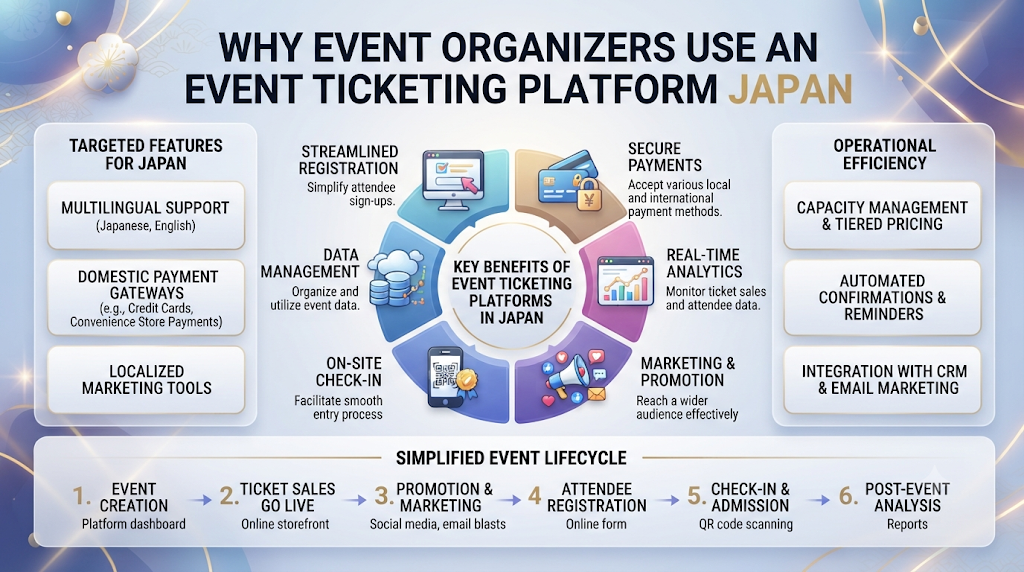
Hiroshi runs a tiny coffee shop in Osaka. Last month, a customer asked him where to catch live music nearby. He had no answer. Now he keeps a short list on his counter. That list comes from MyEventsNow Japan.
MyEventsNow Japan is an online event discovery, ticket booking, and event promotion platform. It links organizers, businesses, communities, and attendees across Japan. Visitors can find events, check ticket details, and use booking options where available. Organizers can publish listings and reach fresh audiences.
Getting to Know the Platform
Imagine a market where events are the goods. Organizers set up their stalls. Attendees walk through and choose what suits them. That’s the basic idea behind MyEventsNow Japan.
The platform hosts many kinds of events. You’ll find concerts, festivals, workshops, exhibitions, conferences, and networking events. Cultural celebrations sit on the same list. The marketplace also covers venue exploration, cultural experiences, organizer management, and community engagement.
Organizers use the space to share event listings. They post schedules, venue information, and admission details. Businesses, schools, agencies, and community groups all take part. The goal stays simple: help events meet the right people.
The Two Sides of the Platform
Attendees and organizers share one space, but they want different things. The table below sums up the main differences.
| Area | For Attendees | For Organizers |
|---|---|---|
| Main purpose | Find events to join | Publish and promote events |
| Discovery or publishing | Browse event listings | Create event listings |
| Tickets and admission | Review ticket and admission details | Share admission information |
| Registration and participation | Check registration options | Manage registration processes |
| Event information | Read schedules and venue details | Provide schedules and venue details |
| Marketplace extras | Explore venues and cultural experiences | Engage with communities |
Read the table one row at a time. Each row covers a single area. Then compare how it serves each group. This makes the shared features easier to see.
Part One: For Attendees, From First Click to Booking
Attendees have plenty of ways to use the platform. You can start wide and then narrow down. Here’s how each part works.
Browsing upcoming events across Japan
Begin with the full list. The platform shows many Upcoming Events in Japan in one place. You’ll see concerts, festivals, workshops, and conferences side by side. This helps you compare options without hopping between sites.
The listing view suits anyone new to an area. Students, visitors, and residents can all use it. It saves time when you don’t know where to start.
Tip: Save events you like before you decide. You can review them later with less rush.
Exploring Tokyo
Tokyo has a busy event scene. The platform lists live performances, technology meetups, and nightlife. You’ll also find professional seminars, food festivals, and entertainment experiences. There’s plenty to match different tastes.
Events in Tokyo suit many people. Music fans can find shows. Professionals can find seminars. Visitors can find cultural experiences.
Tip: Check the venue area before you book. Travel time matters in a big city.
Exploring Osaka
Osaka offers its own mix. The platform lists music concerts and business conferences. You’ll also see cultural activities and community gatherings. Local experiences round out the options.
Events in Osaka feel friendly and close-knit. They suit people who want a local feel. Community groups often run smaller gatherings here.
Tip: Look at event timing before you plan your day. Some events run late into the evening.
Traditional celebrations and seasonal festivals
Japanese Festivals and Events form a big part of the platform. You’ll find traditional celebrations and seasonal festivals. Cultural performances and unique Japanese experiences are listed too. These suit residents and international visitors alike.
These events help you understand local culture. They’re open to anyone who wants to join. Many people attend just to learn something new.
Tip: Read the event description well. It often explains what to expect and how to take part.
Music fans: concerts, independent artists, and DJ events
Music lovers have plenty to explore. The platform lists live music performances and independent artists. DJ events and entertainment programs appear across Japanese cities too. You can find small shows and larger concerts.
Concert Tickets Japan options vary by event. Some events offer online booking. Others may ask you to register first. Always check the details for each show.
Tip: Follow artists you like through the platform. You’ll spot their next show sooner.
Professionals and learners: seminars, conferences, and networking
The platform isn’t just for fun events. It also lists workshops, exhibitions, and conferences. Networking events help you meet new people. Professional seminars help you learn new skills.
These events suit working professionals and students. They also help people new to a city build contacts.
Tip: Register early when an event looks useful. Popular sessions can fill up fast.
Reviewing event details and booking options
Before you commit, read the full event page. Check the date, time, and venue. Look at the admission details and any registration steps. Then review the booking options shown.
Online Event Ticket Booking Japan works best when you read first. Some events offer online booking. Others may use a simple registration form. The platform shows what’s available for each event.
Tip: Confirm the steps before you pay or register. A quick check avoids confusion later.
Tokyo and Osaka: A Friendly Comparison
Both cities offer a lot, but their strengths differ. The table below shows what each city lists.
| Event Type | Tokyo | Osaka |
|---|---|---|
| Music and live performances | Live performances listed | Music concerts listed |
| Business and professional events | Professional seminars listed | Business conferences listed |
| Technology events | Technology meetups listed | Not specified |
| Cultural and community activities | Entertainment experiences listed | Cultural activities and community gatherings listed |
| Food, nightlife, and entertainment | Nightlife and food festivals listed | Local experiences listed |
Always check each event’s date, venue, and admission details. City lists can change over time. The event page is your best source.
Part Two: For Organizers, From Listing to Management
Organizers use the platform to reach people. The steps are clear and simple. Here’s how each part works.
Creating event listings with schedules, venue information, and admission details
Start with a clear event listing. Add the event name and a short description. Then add the schedule and venue information. Finish with admission details so people know what to expect.
This step suits any organizer, new or experienced. A complete listing helps attendees decide fast. It also cuts down on repeated questions.
Tip: Write the description in plain words. Short sentences help people read it quickly.
Who can publish: agencies, businesses, schools, communities, and independent professionals
Many groups can list events. Event agencies and businesses can publish. Educational institutions and community groups can too. Independent professionals can also list their own events.
This openness helps small organizers reach new people. It also gives bigger groups a simple way to share schedules.
Tip: Fill in every field on the listing form. Missing details can confuse attendees.
Registration processes and participant communication
An Event Registration Platform Japan helps organizers manage sign-ups. The platform connects attendees with organizers. It shares participation information and event communication options.
This step helps organizers keep everyone informed. Attendees get clear next steps after they register. Both sides benefit from simple updates.
Tip: Send updates when plans change. A short message keeps trust strong.
Online ticket selling and publishing workflows
Some organizers want to Sell Event Tickets Online Japan. The platform provides event publishing workflows for this. It describes registration and payment-processing capabilities where supported and enabled.
Not every event offers online payment. Some use simple registration instead. Always check what’s enabled for your event.
Tip: Test your ticket steps before you publish. A smooth flow helps attendees finish booking.
Venues, Culture, and Community: The Wider Marketplace
The platform goes beyond tickets. It also helps you explore venues across Japan. You can learn about cultural experiences tied to events. Organizer management tools help keep listings in order. Community engagement ties it all together.
This wider view helps attendees plan more than one stop. You might find a venue near a festival you want to see. Organizers can use the same view to reach local communities.
The marketplace works best when both sides use it fully. Attendees explore more. Organizers share more. Over time, the platform becomes a useful map of what’s happening across Japan.
Simple Tips for Better Listings and Bookings
A few small habits help both groups. Here are some to try.
For attendees:
- Check the date and venue twice before booking.
- Read the admission details so nothing surprises you.
- Confirm the registration steps before you finish.
- Save events you like so you can compare them later.
For organizers:
- Keep your event description complete and up to date.
- Update the listing as soon as plans change.
- Send short messages to keep participants informed.
- Review your listing from an attendee’s view before publishing.
A Hypothetical Scenario
Picture a small music school in Tokyo planning a weekend showcase. The organizer is an independent professional. First, they write a short description of the event. Then they add the venue and the schedule. Next, they add admission details and the registration steps. Finally, they publish the listing and turn on registration where enabled.
A visitor in Tokyo finds the event while browsing. They read the details and check the schedule. They review the registration option and sign up. Later, the organizer sends a short update about the start time. The visitor checks the message and plans their trip.
This scenario is hypothetical. It shows how the platform can connect both sides in a simple way.
Frequently Asked Questions About MyEventsNow Japan
What does MyEventsNow Japan actually do?
It’s an online platform for event discovery, ticket booking, and promotion. It connects organizers, businesses, communities, and attendees across Japan.
How can I find upcoming events in Japan?
Browse the event listings on the platform. You’ll see concerts, festivals, workshops, and more in one place.
What kinds of events appear for Tokyo?
Tokyo listings include live performances, tech meetups, and nightlife. You’ll also find seminars, food festivals, and entertainment experiences.
Which events are listed for Osaka?
Osaka covers music concerts and business conferences. Cultural activities and community gatherings appear too.
Can I book concert tickets through the platform?
Yes, where the event offers booking options. Check each event page to see what’s available.
How do organizers create a listing?
They add a description, schedule, venue details, and admission information. Then they publish it for attendees to find.
Who is allowed to list events?
Agencies, businesses, schools, community groups, and independent professionals can all list events.
How does registration work for attendees?
The platform connects attendees with organizers. It shares participation details and communication options where enabled.
Can organizers sell tickets online?
Some can, where supported and enabled. The platform describes registration and payment options for each event.
Does the platform help with venues and community?
Yes. It includes venue exploration, cultural experiences, and community engagement. Organizer management tools are part of the marketplace too.
Final Thoughts
MyEventsNow Japan works for two kinds of people. Attendees get a simple way to find events and check booking options. Organizers get a clear path to list events and reach new people. Both sides meet in one place, which saves time and effort.
Whether you live in Japan or plan to visit, the platform offers a calm starting point. Take a look, read the details, and choose what fits your day.
phir se likh ke do but diffrent words mey aur diffrent perspective mey aur human tone mey aur jo maine prompble batatya hai usse dhyan mey rakh ke blog likh ke dena dhyan reakhan readbility 70 % – 80% jana chhaiye dublicate contnt bhi nhi hona chhiye uniqe hona chhiye
Your Simple Roadmap to Events in Japan with MyEventsNow Japan
Aiko teaches English in Osaka. Last week, a student asked her for fun weekend ideas. Aiko didn’t want to guess. So she opened MyEventsNow Japan and found three events in minutes. The student picked one and thanked her twice.
MyEventsNow Japan is an online event discovery, ticket booking, and event promotion platform. It brings organizers, businesses, communities, and attendees together across Japan. You can look up events, check ticket details, and use booking options where available. Organizers can post listings and meet new audiences.
A Clear View of What It Does
Think of the platform as a busy town square. Organizers put up their notices. Attendees stroll past and pick what catches their eye. That’s the simple idea behind MyEventsNow Japan.
The platform holds many event types. You’ll see concerts, festivals, workshops, exhibitions, conferences, and networking events. Cultural celebrations share the same space. The marketplace also covers venue exploration, cultural experiences, organizer management, and community engagement.
Organizers use it to share event listings. They add schedules, venue information, and admission details. Businesses, schools, agencies, and community groups all join in. The goal is plain: help events find the right people.
Attendees and Organizers: Two Sides, One Space
Both groups use the same platform, but their needs differ. The table below shows the main points.
| Area | For Attendees | For Organizers |
|---|---|---|
| Main purpose | Find events to join | Publish and promote events |
| Discovery or publishing | Browse event listings | Create event listings |
| Tickets and admission | Review ticket and admission details | Share admission information |
| Registration and participation | Check registration options | Manage registration processes |
| Event information | Read schedules and venue details | Provide schedules and venue details |
| Marketplace extras | Explore venues and cultural experiences | Engage with communities |
Read the table one row at a time. Each row covers a single area. Then compare how it serves each group. This makes the shared features easier to spot.
Part One: For Attendees, From First Look to Booking
Attendees have many ways to use the platform. You can start broad and then narrow your search. Here’s how each part works.
Browsing upcoming events across Japan
Begin with the full list. The platform shows many Upcoming Events in Japan in one place. You’ll see concerts, festivals, workshops, and conferences side by side. This helps you compare options without jumping between sites.
The listing view suits anyone new to an area. Students, visitors, and residents can all use it. It saves time when you don’t know where to begin.
Tip: Save events you like before you decide. You can review them later with less rush.
Exploring Tokyo
Tokyo has a busy event scene. The platform lists live performances, technology meetups, and nightlife. You’ll also find professional seminars, food festivals, and entertainment experiences. There’s plenty to match different tastes.
Events in Tokyo suit many people. Music fans can find shows. Professionals can find seminars. Visitors can find cultural experiences.
Tip: Check the venue area before you book. Travel time matters in a big city.
Exploring Osaka
Osaka offers its own mix. The platform lists music concerts and business conferences. You’ll also see cultural activities and community gatherings. Local experiences round out the options.
Events in Osaka feel friendly and close-knit. They suit people who want a local feel. Community groups often run smaller gatherings here.
Tip: Look at event timing before you plan your day. Some events run late into the evening.
Traditional celebrations and seasonal festivals
Japanese Festivals and Events form a big part of the platform. You’ll find traditional celebrations and seasonal festivals. Cultural performances and unique Japanese experiences are listed too. These suit residents and international visitors alike.
These events help you understand local culture. They’re open to anyone who wants to join. Many people attend just to learn something new.
Tip: Read the event description well. It often explains what to expect and how to take part.
Music fans: concerts, independent artists, and DJ events
Music lovers have plenty to explore. The platform lists live music performances and independent artists. DJ events and entertainment programs appear across Japanese cities too. You can find small shows and larger concerts.
Concert Tickets Japan options vary by event. Some events offer online booking. Others may ask you to register first. Always check the details for each show.
Tip: Follow artists you like through the platform. You’ll spot their next show sooner.
Professionals and learners: seminars, conferences, and networking
The platform isn’t just for fun events. It also lists workshops, exhibitions, and conferences. Networking events help you meet new people. Professional seminars help you learn new skills.
These events suit working professionals and students. They also help people new to a city build contacts.
Tip: Register early when an event looks useful. Popular sessions can fill up fast.
Reviewing event details and booking options
Before you commit, read the full event page. Check the date, time, and venue. Look at the admission details and any registration steps. Then review the booking options shown.
Online Event Ticket Booking Japan works best when you read first. Some events offer online booking. Others may use a simple registration form. The platform shows what’s available for each event.
Tip: Confirm the steps before you pay or register. A quick check avoids confusion later.
Tokyo and Osaka: A Friendly Comparison
Both cities offer a lot, but their strengths differ. The table below shows what each city lists.
| Event Type | Tokyo | Osaka |
|---|---|---|
| Music and live performances | Live performances listed | Music concerts listed |
| Business and professional events | Professional seminars listed | Business conferences listed |
| Technology events | Technology meetups listed | Not specified |
| Cultural and community activities | Entertainment experiences listed | Cultural activities and community gatherings listed |
| Food, nightlife, and entertainment | Nightlife and food festivals listed | Local experiences listed |
Always check each event’s date, venue, and admission details. City lists can change over time. The event page is your best source.
Part Two: For Organizers, From Listing to Management
Organizers use the platform to reach people. The steps are clear and simple. Here’s how each part works.
Creating event listings with schedules, venue information, and admission details
Start with a clear event listing. Add the event name and a short description. Then add the schedule and venue information. Finish with admission details so people know what to expect.
This step suits any organizer, new or experienced. A complete listing helps attendees decide fast. It also cuts down on repeated questions.
Tip: Write the description in plain words. Short sentences help people read it quickly.
Who can publish: agencies, businesses, schools, communities, and independent professionals
Many groups can list events. Event agencies and businesses can publish. Educational institutions and community groups can too. Independent professionals can also list their own events.
This openness helps small organizers reach new people. It also gives bigger groups a simple way to share schedules.
Tip: Fill in every field on the listing form. Missing details can confuse attendees.
Registration processes and participant communication
An Event Registration Platform Japan helps organizers manage sign-ups. The platform connects attendees with organizers. It shares participation information and event communication options.
This step helps organizers keep everyone informed. Attendees get clear next steps after they register. Both sides benefit from simple updates.
Tip: Send updates when plans change. A short message keeps trust strong.
Online ticket selling and publishing workflows
Some organizers want to Sell Event Tickets Online Japan. The platform provides event publishing workflows for this. It describes registration and payment-processing capabilities where supported and enabled.
Not every event offers online payment. Some use simple registration instead. Always check what’s enabled for your event.
Tip: Test your ticket steps before you publish. A smooth flow helps attendees finish booking.
Venues, Culture, and Community: The Wider Marketplace
The platform goes beyond tickets. It also helps you explore venues across Japan. You can learn about cultural experiences tied to events. Organizer management tools help keep listings in order. Community engagement ties it all together.
This wider view helps attendees plan more than one stop. You might find a venue near a festival you want to see. Organizers can use the same view to reach local communities.
The marketplace works best when both sides use it fully. Attendees explore more. Organizers share more. Over time, the platform becomes a useful map of what’s happening across Japan.
Simple Tips for Better Listings and Bookings
A few small habits help both groups. Here are some to try.
For attendees:
- Check the date and venue twice before booking.
- Read the admission details so nothing surprises you.
- Confirm the registration steps before you finish.
- Save events you like so you can compare them later.
For organizers:
- Keep your event description complete and up to date.
- Update the listing as soon as plans change.
- Send short messages to keep participants informed.
- Review your listing from an attendee’s view before publishing.
A Hypothetical Scenario
Picture a community group in Osaka planning a weekend food festival. First, they write a short description of the event. Then they add the venue and the schedule. Next, they add admission details and the registration steps. Finally, they publish the listing and turn on registration where enabled.
A resident in Osaka finds the event while browsing. They read the details and check the schedule. They review the registration option and sign up. Later, the organizer sends a short update about the start time. The resident checks the message and plans their visit.
This scenario is hypothetical. It shows how the platform can connect both sides in a simple way.
Frequently Asked Questions About MyEventsNow Japan
What does MyEventsNow Japan actually do?
It’s an online platform for event discovery, ticket booking, and promotion. It connects organizers, businesses, communities, and attendees across Japan.
How can I find upcoming events in Japan?
Browse the event listings on the platform. You’ll see concerts, festivals, workshops, and more in one place.
What kinds of events appear for Tokyo?
Tokyo listings include live performances, tech meetups, and nightlife. You’ll also find seminars, food festivals, and entertainment experiences.
Which events are listed for Osaka?
Osaka covers music concerts and business conferences. Cultural activities and community gatherings appear too.
Can I book concert tickets through the platform?
Yes, where the event offers booking options. Check each event page to see what’s available.
How do organizers create a listing?
They add a description, schedule, venue details, and admission information. Then they publish it for attendees to find.
Who is allowed to list events?
Agencies, businesses, schools, community groups, and independent professionals can all list events.
How does registration work for attendees?
The platform connects attendees with organizers. It shares participation details and communication options where enabled.
Can organizers sell tickets online?
Some can, where supported and enabled. The platform describes registration and payment options for each event.
Does the platform help with venues and community?
Yes. It includes venue exploration, cultural experiences, and community engagement. Organizer management tools are part of the marketplace too.
Final Thoughts
MyEventsNow Japan works for two kinds of people. Attendees get a simple way to find events and check booking options. Organizers get a clear path to list events and reach new people. Both sides meet in one place, which saves time and effort.
Whether you live in Japan or plan to visit, the platform offers a calm starting point. Take a look, read the details, and choose what fits your day.
Leave a Reply