A Practical Guide for Japanese IT Leaders: Building Modern, Resilient Engineering Teams
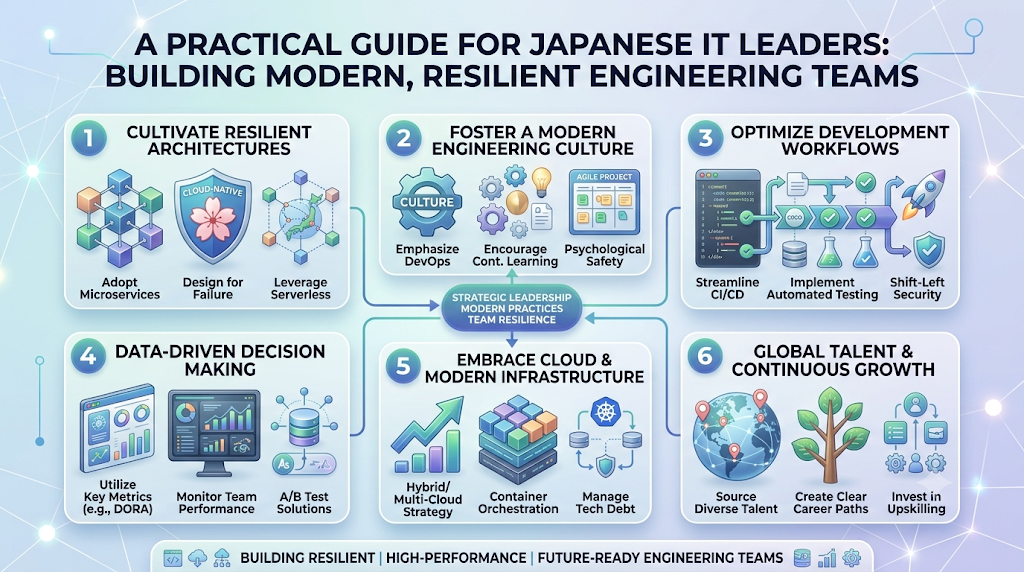
Modern business moves fast, so enterprise software must adapt every single day. Across Japan, many technology leaders want to deliver digital services quickly to satisfy their customers. However, teams often face a major shortage of modern cloud skills. Engineers who mastered traditional on-premises setups feel unsure about complex microservices, automated pipelines, and cloud networks. Rushing into modernization without proper preparation causes project delays and fear of outages. You can overcome these hurdles with structured coaching and clear direction. That is where DevOpsSchool.jp serves as a reliable enterprise partner for technical learning and digital operations.
What is DevOpsSchool.jp?
DevOpsSchool.jp works as an all-in-one partner for enterprise technical upskilling and architectural advisory. The organization focuses on practical education, workflow improvement, and long-term technical guidance.
Engineers practice inside dedicated cloud labs rather than simply listening to long slide decks. Team members discover how to write clean configuration code, automate deployments, and track service health. DevOpsSchool.jp gives staff the daily skills they need to support modernization initiatives with minimal operational risk.
Building Strong Internal Engineering Skills
Many legacy enterprise departments still push software updates by hand. Manual releases involve long checklists, late-night maintenance windows, and painful human mistakes. When an update fails, engineers scramble for hours to restore service.
Structured corporate programs replace these stressful events with predictable, automated delivery routines. Teams learn how to package software, write automated test cases, and build repeatable release workflows.
Organizing targeted DevOps 研修 helps developers and system operators establish a shared delivery language. Everyone takes joint ownership of application stability and deployment speed.
Furthermore, investing in comprehensive DevOps corporate training Japan strengthens your own workforce from within. Cultivating internal engineering talent delivers lasting independence and lowers your long-term reliance on external contractors.
Hands-On Expert Guidance for Transformations
Acquiring new software tools will not solve delivery problems on its own. True modernization requires changing team communication, approval chains, and development habits.
Without seasoned outside advice, engineering groups often replicate their old manual workflows inside expensive cloud setups. This mistake inflates infrastructure budgets while delivery speeds remain sluggish.
Engaging professional DevOps コンサルティング gives leadership an objective look at internal workflow bottlenecks. Specialists evaluate release cycles and help teams design practical, automated delivery pipelines.
An experienced DevOps consultant Japan assists your staff during every step of the transition. These advisors provide direct mentoring on branching strategies, cloud environments, and pipeline automation. This ongoing guidance keeps engineering projects aligned with business goals.
Mastering Cloud-Native Infrastructure Tools
Modern IT platforms rely on modular, isolated software packages called containers. Containers group application code, system libraries, and runtime dependencies together. This packaging ensures the application runs consistently across development laptops, test setups, and live production environments.
However, running hundreds of containers across dozens of virtual servers requires dedicated oversight. This is where Kubernetes plays a central role. Kubernetes acts as an automated operations manager for your software containers. It handles container scheduling, scales out services during busy periods, and restarts unhealthy workloads.
Completing an interactive Kubernetes 研修 gives your engineers hands-on practice managing production-grade clusters safely.
At the same time, platform teams must move away from building cloud networks through manual web consoles. Terraform enables engineers to express infrastructure using structured code files.
Through Terraform 研修, engineers learn to provision compute instances, networks, and databases using declarative templates. This approach creates reproducible environments and eliminates costly configuration drift across cloud regions.
Core Technical Training Tracks
The table below summarizes the key learning paths available for enterprise IT organizations.
| Training Domain | Core Tool / Focus | Business Benefit | Target Team |
| DevOps Core | Git, Jenkins, GitHub Actions | Shorter release cycles and fewer deployment errors | Software Developers and Sysadmins |
| Container Platforms | Docker and Kubernetes | Efficient server utilization and effortless app scaling | Infrastructure and Cloud Engineers |
| Infrastructure as Code | Terraform and Ansible | Fast, repeatable, and audited cloud environment setups | Platform and Systems Engineers |
| Site Reliability | Prometheus, Grafana, OpenTelemetry | Proactive alert management and higher service uptime | Operations and SRE Teams |
| Cloud Security | SonarQube, Trivy, HashiCorp Vault | Reduced compliance risk and early bug detection | Security and Delivery Teams |
| Machine Learning Ops | MLflow and Kubeflow | Streamlined deployment and tracking of live AI models | Data Scientists and ML Engineers |
Ensuring System Reliability and Uptime
Downtime damages customer trust and hurts enterprise revenue. When a critical consumer application crashes, business operations stall immediately.
Site Reliability Engineering, or SRE, treats operational management as a software engineering discipline. SRE teams measure application reliability using clear performance objectives and allowable error budgets.
Enrolling your engineers in SRE 研修 provides practical experience in building automated monitoring dashboards. Staff learn how to track latency, system traffic, and error rates before users face service problems.
Engineers also learn how to lead constructive, blameless reviews after incidents. Instead of assigning personal fault, teams identify architectural gaps and improve recovery automation.
Integrating Security into Daily Delivery
In traditional development models, dedicated security audits occur just days before a major release. If auditors uncover a serious flaw, the entire rollout stops, forcing engineers to rewrite code under intense stress.
DevSecOps eliminates these delays by integrating security inspections straight into everyday coding workflows. Automated scanners review every code change for out-of-date packages, misconfigurations, and hardcoded credentials.
A well-structured DevSecOps 研修 teaches your software engineers how to resolve security flaws as part of their standard development process.
Catching software weaknesses early protects corporate assets and keeps release schedules dependable.
Scaling AI and Machine Learning Pipelines
Enterprises in Japan are integrating machine learning into daily business functions. Still, moving an experimental model from a data scientist’s notebook into a stable production system is challenging.
Data inputs fluctuate over time, causing model predictions to degrade if left unmonitored. MLOps introduces automated engineering standards to the entire machine learning lifecycle.
Participating in targeted MLOps 研修 teaches data teams how to automate pipeline runs, package models into containers, and validate output quality.
Engineers also learn to monitor live inference services and schedule automatic model retraining. This systematic approach ensures enterprise artificial intelligence platforms remain accurate and dependable.
Continuous Technical Assistance for Enterprise Teams
Even the most capable engineering teams occasionally run into difficult infrastructure hurdles. A deployment script may break, or an unexpected networking glitch might disrupt a mission-critical release.
Securing dependable DevOps support Japan provides your managers and engineers with accessible technical safety nets. Expert mentors assist your staff with urgent troubleshooting, architecture reviews, and configuration fixes.
This ongoing technical support keeps your projects moving forward and reinforces team confidence as new platforms go live.
Evaluating Training and Consulting Partners
Selecting an enterprise learning and advisory partner requires thoughtful evaluation. Use this framework to assess potential providers in Japan.
| Evaluation Factor | What to Look For | Why It Matters for Japanese Enterprises |
| Lab Architecture | Live cloud sandboxes with actual enterprise tooling | Engineers build genuine muscle memory by performing practical tasks. |
| Large-Scale Experience | Proven delivery history with complex organizations | Ensures advisors respect governance, audits, and legacy architectures. |
| Language Flexibility | Mentors proficient in both Japanese and English | Bridges communication gaps while connecting teams to global best practices. |
| Tailored Content | Curriculums customized to company toolstacks | Prevents wasted training hours on platforms your teams do not maintain. |
| Post-Session Mentoring | Dedicated office hours, lab access, and reviews | Helps staff safely apply newly acquired practices to internal enterprise projects. |
Real-Life Enterprise Scenarios
- Modernizing an Insurance Claim Processing Core: An enterprise insurance group handled business logic on monolithic servers. Deploying system updates required extensive offline maintenance windows each month. After adopting containerization and pipeline automation, the team divided their workflows into discrete services. The group now deploys updates smoothly during regular business hours with no disruption for policyholders.
- Automating a Retail Inventory Platform: A retail brand managed web application testing through manual verification routines. Every production release demanded three full days of manual validation. By implementing automated continuous integration pipelines, the team cut verification cycles down to twenty minutes. Developers now receive automated bug reports within minutes of committing code.
- Preventing Outages in a Transportation Network: A transit provider experienced intermittent app crashes during heavy morning rush hours. Support engineers only learned about slowdowns through customer complaints. Following structured SRE coaching, the operations team deployed real-time metrics dashboards and proactive alerts. They now catch database bottlenecks before passengers experience slow ticket bookings.
Common Mistakes to Avoid in Tech Transformations
- Purchasing Software Tools Ahead of People: Modern platforms cannot fix broken teamwork by themselves. Upskill your engineers first so they understand how to use new systems effectively.
- Relying Only on Passive Lectures: Watching presentations does not build hands-on engineering confidence. Ensure your teams practice in real cloud sandbox environments.
- Neglecting Centralized Observability: You cannot diagnose issues without system metrics. Set up application logging and performance tracing early in your project lifecycle.
- Postponing Security Checks Until Release: Leaving security reviews for the final stage causes painful project delays. Embed automated scans inside daily code pipelines.
- Attempting an Abrupt Big-Bang Overhaul: Redesigning every enterprise system at once overwhelms staff and increases operational risks. Begin with a single low-risk service and demonstrate measurable success.
- Overlooking Inter-Department Communication: Modern delivery relies on close cooperation. Developers, platform engineers, and security specialists must share project milestones.
- Adopting Industry Tools Without Clear Need: Avoid chasing trendy tools that do not fit your technical architecture. Select platforms that solve your specific operational challenges.
- Ending Mentorship Once Workshops Finish: Engineers face unexpected edge cases when applying new methods to legacy systems. Offer ongoing advisory support during the first few production releases.
How DevOpsSchool.jp Can Help Your Team
DevOpsSchool.jp works with management teams to design targeted, role-based upskilling programs. Certified instructors guide engineers through interactive workshops focused on practical operational challenges.
Participants gain direct experience deploying applications, configuring cloud infrastructure, and writing automated test pipelines. Courses offer flexible delivery options to accommodate demanding enterprise project schedules.
Whether your staff requires foundational cloud training, high-level architecture consulting, or on-demand operational guidance, DevOpsSchool.jp provides steady technical coaching at every stage of your modernization journey.
A Simple 7-Step Upskilling and Advisory Roadmap
Follow this clear roadmap to plan your team’s technical enablement program:
- Goal: Pinpoint your primary technical bottleneck, such as slow release cadences or unexpected system downtime.
- Search: Research specialized technical training and advisory partners with strong cloud engineering credentials.
- Shortlist: Identify organizations that feature practical sandbox environments and flexible corporate delivery schedules.
- Compare: Evaluate lesson outlines, mentor certifications, and hands-on lab depth across your candidate list.
- Ask: Request a tailored training agenda aligned directly with your enterprise tools and architecture.
- Verify: Confirm that courses include realistic lab assignments, practical assessments, and post-session office hours.
- Decide: Finalize course dates and establish clear engineering metrics to evaluate team progress after graduation.
Frequently Asked Questions (FAQ)
Question 1: What is the primary business objective of modernizing delivery pipelines?
The primary objective is shortening the time it takes to deliver reliable digital value to end users. Modernization breaks down traditional silos between developers and operational teams through shared tools and automation. By verifying code automatically, organizations reduce deployment defects and avoid production crashes. This operational balance enables enterprises to respond to customer needs quickly while keeping critical digital systems stable and secure.
Question 2: Why should an enterprise select structured corporate programs over independent study?
Independent study leads to inconsistent engineering habits across teams. Individual contributors explore different tools without unified design patterns, resulting in maintainability issues across projects. Structured corporate education provides a coherent learning roadmap for the whole engineering group. Hands-on labs reflect your actual enterprise architecture, helping staff learn to tackle production issues collaboratively. This shared training establishes consistent standards and accelerates daily delivery cycles.
Question 3: What is the standard duration for enterprise technology training courses?
Most focused corporate training courses run between three and five consecutive days. Organizations can also divide courses into part-time modules spread across multiple weeks. This flexible schedule allows engineers to absorb new material without stepping away from their active project duties. Comprehensive architectural transformations may take longer. Providers like DevOpsSchool.jp help team leads organize schedules that balance deep learning with ongoing project commitments.
Question 4: Must participating engineers possess prior cloud engineering knowledge?
No, foundational tracks start with essential networking, operating system, and scripting concepts. Instructors clarify these foundational ideas before moving into advanced topics. Having basic experience with Linux terminals and simple code editing is certainly helpful. For intermediate topics such as Kubernetes and Terraform, familiarity with containers is recommended. Course providers supply preparatory materials so that every team member enters class feeling ready to learn.
Question 5: How does hands-on technical training differ from consulting services?
Training focuses on developing internal engineering skills through guided instruction and practical sandbox exercises. Consulting focuses on diagnosing and solving specific organizational bottlenecks and architectural hurdles. A consultant evaluates your development pipelines, deployment workflows, and infrastructure design to design custom operational solutions. Many enterprises leverage both services simultaneously to upskill their staff while resolving urgent release bottlenecks.
Question 6: In what ways does Kubernetes simplify enterprise software operations?
Kubernetes automates the continuous operational tasks required to run containers across server fleets. It regularly checks application health and restarts containers that stop responding. When user traffic surges, Kubernetes scales container counts automatically to maintain performance. It also routes network traffic smoothly across instances to prevent service interruptions. This built-in automation reduces manual maintenance tasks for system administrators and keeps web services available.
Question 7: Why is declarative infrastructure management using Terraform beneficial?
Building cloud networks and virtual instances through manual console clicks takes valuable time and leads to human errors. Small inconsistencies between environments frequently trigger security vulnerabilities and unexpected service outages. Terraform allows engineers to describe infrastructure components using declarative configuration files. Teams can store, version, and review these definitions easily. This workflow enables enterprises to spin up identical cloud environments within minutes whenever required.
Question 8: How does Site Reliability Engineering differ from traditional system administration?
Traditional operations teams spend most of their time responding to system failures and applying manual server patches. In contrast, Site Reliability Engineering uses software engineering principles to automate operational tasks. SRE teams design custom automation to eliminate repetitive operational work. They establish clear service level objectives to balance deployment speed with service stability. This approach steadily improves system resilience and prevents recurring outages.
Question 9: What specific business advantages does early security testing provide?
Shifting security validation into the early phases of software development uncovers flaws before code ever moves toward live servers. Automated testing tools inspect code commits for outdated dependencies and unencrypted secrets. Addressing security risks early in development requires far less effort and money than patching an active production breach. This practice safeguards enterprise data integrity and keeps software release schedules predictable.
Question 10: At what point should an enterprise adopt MLOps principles?
An organization should adopt MLOps as soon as it begins deploying machine learning models into live production environments. While training an experimental model locally is relatively easy, managing streaming data inputs, concept drift, and model retraining requires structured automation. MLOps introduces automated testing and systematic monitoring to machine learning workflows. This engineering discipline ensures your analytical applications remain fast, reliable, and accurate over time.
Question 11: Can enterprise courses be adapted to our specific technical environment?
Yes, professional enterprise training programs can be customized to match your exact software infrastructure. Instructors assess your development tools, operational requirements, and target architecture before classes commence. They configure tailored practical exercises that reflect the real-world conditions your engineers encounter daily. This focused approach ensures your staff can directly apply what they learn to ongoing enterprise projects immediately after class.
Question 12: Which key performance indicators reveal the success of an upskilling program?
Leadership can evaluate training returns by monitoring standard software delivery metrics. Track software deployment frequency, change failure rates, and mean time to restore availability during unexpected disruptions. Following effective training, development teams release updates more frequently with far fewer emergency rollbacks. Operational downtime decreases and resolution times shorten, allowing engineers to focus on delivering high-value business features.
Conclusion
Modernizing enterprise software operations requires practical team enablement, reliable automation patterns, and dedicated technical leadership. Providing your engineers with hands-on practice builds internal capability and sustains long-term digital growth. Managing infrastructure through code, deploying applications inside container clusters, and catching security vulnerabilities early keeps mission-critical platforms secure and stable. Working alongside experienced technology mentors helps your organization avoid expensive mistakes and proceed with confidence. Start by assessing your current software delivery hurdles and establishing a clear roadmap for engineering improvement. With experienced support from DevOpsSchool.jp, your enterprise can build resilient digital services that drive continuous operational success.
Leave a Reply