A Simple Guide To Running Reliable Data Like A Factory
Introduction
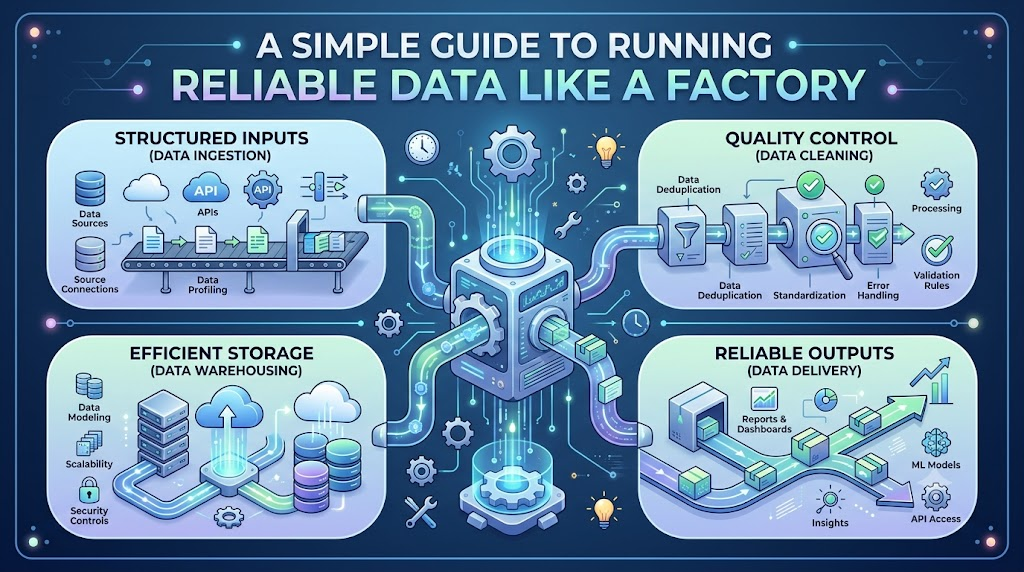
Imagine you run a giant toy factory where conveyor belts move pieces from room to room. If one machine jams or paints a toy the wrong color, the entire assembly line shuts down. In modern companies, data moves through business systems just like toys on a fast conveyor belt. Numbers, customer clicks, and sales records travel between databases every second so managers can make smart decisions. When these digital assembly lines break, business leaders end up looking at empty or broken charts. Adopting an operational factory mindset helps data teams build smooth assembly lines that prevent mistakes. Dedicated educational communities like TheDataOps.org provide clear blueprints so technical teams can master these automated factory practices.
Looking At Data As An Industrial Assembly Line
In traditional offices, people treat data like individual artisan craft projects. A developer writes an import script by hand, a database admin copies tables manually, and an analyst spends hours cleaning messy rows.
Treating data like an industrial assembly line changes everything. Instead of doing chores manually each morning, teams build automated machinery that handles repetitive work without getting tired.
This operational framework applies classic manufacturing principles, Agile planning, and automated DevOps techniques to data pipelines. By organizing daily tasks into predictable, repeatable steps, companies deliver fresh numbers without chaotic fire drills.
Three Rules For The Digital Assembly Line
A smooth industrial data line depends on three everyday disciplines:
- Standardized inputs: Requiring incoming files to meet clear format agreements before entering the main pipeline.
- Automated inspection stations: Testing every batch of records at intermediate steps to catch errors early.
- Rapid maintenance loops: Packaging pipeline logic into small, tested updates so fixes deploy in minutes instead of weeks.
The Automobile Inspection Analogy
Consider how car manufacturers build reliable vehicles. They do not wait until a car drives off the lot to check if the brakes work.
They test the brakes, engine, and electrical wires at every station along the assembly line. Modern data management places automated inspection points right along the data stream, stopping broken records before they ever reach business dashboards.
Automating The Digital Conveyor Belt
A data pipeline is the digital conveyor belt that moves raw numbers from application databases into clean reporting storage. Operating these belts manually leads to missed steps, delayed numbers, and avoidable human errors.
Automating the data pipeline turns fragile manual handoffs into predictable machinery. Automated workers run on precise timers, collect fresh transaction files, strip out duplicate records, and feed clean tables into analytical storage without human intervention.
| Factory Station | Engineering Function | Everyday Technology |
| Raw Receiving | Gathers event streams, operational logs, and API feeds | Apache Kafka, Python scripts |
| Cleaning & Refining | Strips out duplicates, formats text, and calculates totals | Apache Spark, distributed clusters |
| Central Dispatcher | Schedules tasks and manages job order dependencies | Apache Airflow |
| System Alarms | Displays pipeline speed, volume rates, and job failures | Grafana, cloud dashboards |
Inspection Stations: Quality Checks And System Health
Running high-speed conveyor belts is dangerous if nobody inspects the cargo. Moving broken numbers quickly simply produces incorrect business choices faster.
Maintaining complete confidence requires two distinct safeguards: quality gate checks and comprehensive system health monitoring.
Data quality management acts as the physical caliper measuring each part. Automated verification rules examine individual rows to confirm that numbers fall within expected boundaries, dates match standard calendars, and required fields are never left blank.
Data observability serves as the factory control tower. Instead of looking only at one single part, the control tower monitors the whole factory floor across five vital signs:
- Delivery timeliness: Checking whether fresh records arrive at their destination on schedule.
- Throughput volume: Alerting engineers when a batch contains significantly more or fewer rows than normal.
- Structural schema integrity: Catching unexpected column renames or missing fields before jobs fail.
- Value distributions: Watching for unusual spikes, such as unexpected negative prices or skewed averages.
- Component lineage: Mapping the complete trail of each calculation from raw input to final report.
The Toolkit Powering The Modern Factory Floor
Just like any real-world factory, an automated data operation relies on specialized, purpose-built machinery working together in harmony.
Engineers write flexible transformation logic using Python and database queries. Fast streaming platforms like Apache Kafka catch massive floods of website events, acting as temporary holding bins so downstream machines do not get overwhelmed. Heavy computational engines like Apache Spark split large aggregation jobs across multiple processing units to finish work in seconds.
Scheduling orchestrators like Apache Airflow act as master dispatchers, ensuring data cleaning runs only after raw downloads finish successfully. Container technologies managed by Kubernetes package these tools into portable capsules that run reliably across multiple cloud environments.
Finally, reporting tools like Power BI and Tableau act as store display cases, turning clean data into colorful charts that everyone can understand.
Learning The Trade Of A DataOps Specialist
Because every modern organization relies on steady data flows, the demand for specialists who know how to build reliable data pipelines continues to climb.
A modern DataOps engineer functions as the plant mechanic and systems architect for corporate data pipelines. Developing practical skills in this field follows a logical path:
- Learn foundational scripting with Python and master table management using SQL.
- Store transformation code in version control systems like Git to maintain complete change histories.
- Build containerized environments so data tools run identically on laptops and cloud servers.
- Add automated testing checks that validate input files before triggering major processing tasks.
- Configure workflow schedulers like Apache Airflow to handle job sequences, automatic retries, and failure alerts.
Participating in structured training programs and working toward practical certifications gives aspiring engineers hands-on mastery of pipeline reliability. Knowledge platforms like TheDataOps.org offer accessible educational resources that explain complex enterprise infrastructure through clear, actionable lessons.
Overcoming Common Shop-Floor Obstacles
Transforming traditional, manual data tasks into an automated assembly line presents a few predictable hurdles:
- Siloed operational habits: Software developers, database admins, and business users often work in isolation without shared communication channels.
- Aging infrastructure: Legacy enterprise databases may lack modern connectors, requiring custom scripts to bridge the gap.
- Fear of automation: Teams accustomed to manual validation may hesitate to trust automated testing frameworks.
- Tool proliferation: Installing too many complicated platforms simultaneously can overwhelm engineers instead of simplifying their daily workflows.
Focusing on incremental improvements, establishing clear shared schemas, and starting with basic automated tests helps teams resolve these hurdles smoothly.
Frequently Asked Questions
What is DataOps and why is it important for modern businesses?
DataOps is an automated, collaborative approach to managing data pipelines using Agile planning and DevOps testing practices.
It is important because it prevents data corruption, speeds up analytics delivery, and ensures business leaders make critical decisions using reliable facts.
How does viewing data as an assembly line help engineering teams?
It shifts the focus from manual firefighting to predictable, automated manufacturing.
Teams build automated testing and scheduling systems that handle routine tasks smoothly, freeing engineers to work on creative problems.
What is the main difference between data quality and data observability?
Data quality examines specific data values to confirm that fields are filled out accurately and formatted properly.
Data observability evaluates the health of the entire pipeline ecosystem, watching delivery timing, processing volume, schema shifts, and system errors.
Which basic programming skills should an aspiring DataOps engineer start with?
Beginners should focus on learning Python for building automated scripts and SQL for querying relational databases.
Gaining familiarity with version control tools like Git is also essential for tracking changes across pipeline configurations.
How does data pipeline automation improve business efficiency?
Automation removes tedious manual tasks like exporting spreadsheets, fixing spelling errors, and re-running failed scripts by hand.
This ensures reports update consistently every morning without requiring midnight interventions from on-call engineers.
What specific job does Apache Airflow perform in a data pipeline?
Apache Airflow functions as the central scheduling dispatcher that organizes tasks into ordered workflows called directed acyclic graphs.
It tracks task dependencies, retries transient network errors automatically, and triggers notifications if a job fails.
Why are automated schema validation checks necessary?
When source applications rename database columns or change data formats without warning, downstream reports break instantly.
Automated schema validation catches these structural differences at the front door, stopping corrupt batches before they propagate.
Can small companies benefit from these factory-style data practices?
Yes, small teams benefit significantly because automated validation and scheduling prevent small errors from snowballing into technical debt.
Setting up basic Git version control and lightweight automated data checks saves growing businesses hours of manual debugging.
What does data lineage mean in practice?
Data lineage is the step-by-step history showing where a piece of information came from and how it was modified along the way.
If a monthly revenue total looks incorrect, lineage tracking allows engineers to trace the number back to the exact calculation step that caused the issue.
Where can beginners find structured learning materials for DataOps?
Aspiring engineers can practice by creating small Python transformation scripts and running local tests on open-source datasets.
Exploring educational courses, certification paths, and foundational guides on learning sites like TheDataOps.org provides clear, structured roadmaps for building enterprise-grade data pipelines.
Final Thoughts
Adopting an industrial factory approach to enterprise data operations turns chaotic manual processes into dependable, automated pipelines. By introducing continuous automated testing, clear schema standards, and end-to-end operational visibility, teams eliminate unexpected pipeline failures and deliver trusted numbers every day. Any technology professional can learn these principles by focusing on steady, incremental improvements to their data plumbing. Exploring practical educational resources and hands-on lessons through platforms like TheDataOps.org gives engineers the tools they need to build resilient, self-healing data systems.
Leave a Reply