How to Rent Motorcycles and Cars for Canadian Road Trips: The Complete Guide
Introduction
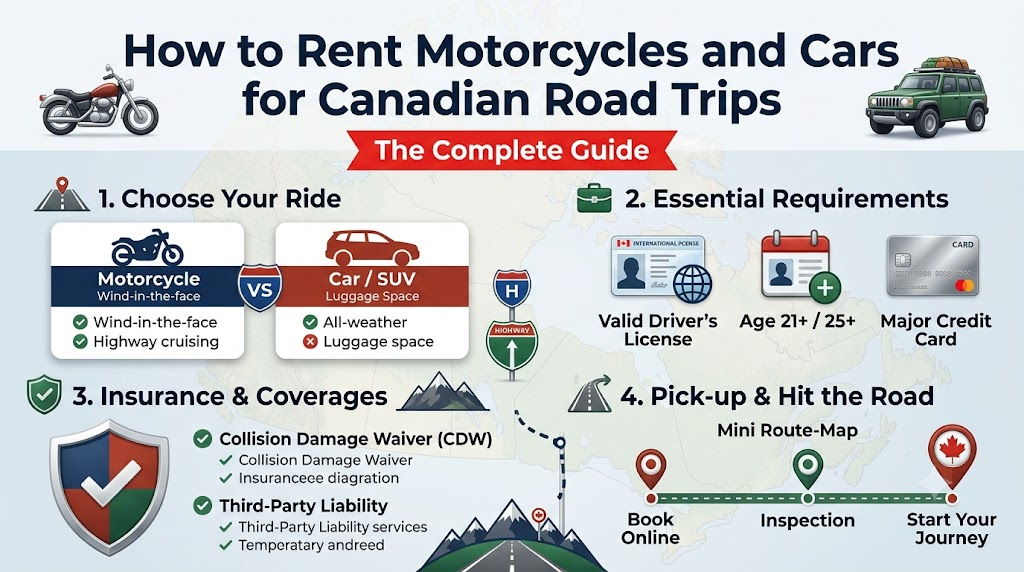
Renting a vehicle gives you the freedom to explore wild mountain passes, clear lakes, and open highways across Canada. You can book a car or motorcycle online from verified local hosts to bypass busy airport counters and surprise charges. Many visitors struggle with limited bike choices at big rental desks, complex insurance forms, and short summer riding months. A great Canadian road trip starts with early planning, knowing your provincial license rules, and picking the right vehicle for changing weather. MotoShare.ca provides an easy online rental marketplace that connects travelers with trustworthy vehicle hosts in top cities. Smart planning lets you avoid hidden costs and enjoy the open road with complete confidence.
What Is MotoShare.ca?
MotoShare.ca is a Canadian vehicle rental marketplace where travelers book cars and motorcycles directly from local hosts. You can choose commuter bikes, touring machines, adventure bikes, and reliable cars in cities like Toronto, Vancouver, Calgary, and Montreal. The platform lets you browse real photos, read verified host ratings, and view clear daily prices. Every booking includes vetted host checks and simple communication tools to make pickup seamless. You avoid traditional desk lines and get straight to your journey.
How to Rent a Motorcycle in Canada
To rent a motorcycle in Canada, you need a full motorcycle license, an approved helmet, and an active credit card. Most hosts require you to be at least 21 years old. You must hold an Ontario Class M, a British Columbia Class 6, an Alberta Class 6, or an equal foreign license. Industry data shows that security deposits typically range from 500 to 1,500 Canadian dollars. Peak summer dates sell out fast, so reserve your bike four to six weeks early to rent a motorcycle in Canada.
Choosing the Right Motorcycle Rental in Canada
The best motorcycle rental Canada offers depends on your planned travel distance and road surfaces. Our riding season runs mainly from late May to early October because spring and fall bring icy mornings. Cruisers offer low seats and great balance for straight, wide prairie highways. Standard bikes fit relaxed day trips, while large touring machines provide windshields and lockable luggage for cross-country routes. Choose a bike that matches your real comfort level rather than pure engine power.
City Spotlight: Motorcycle Rental Toronto
Booking a motorcycle rental Toronto gives you quick access to peaceful lakes, farm towns, and curving river roads. Riders love day trips to the vineyards of Niagara-on-the-Lake or the twists along Forks of the Credit. You can also head north into the deep forests of Muskoka lake country. Toronto pickup spots let you leave city traffic behind quickly. Always plan your ride outside of peak morning and evening highway rushes.
City Spotlight: Motorcycle Rental Vancouver
A motorcycle rental Vancouver lets you experience deep ocean fjords and steep mountain passes in one day. The most famous local route is the Sea-to-Sky Highway, which runs from Vancouver up to Whistler. This paved highway treats riders to views of Howe Sound, tall granite cliffs, and glacial waterfalls. Coastal weather changes fast, so pack rain layers even during bright summer afternoons. Starting your ride early helps you avoid weekend tourist traffic.
Mountain Touring: Motorcycle Rental Calgary
Choosing a motorcycle rental Calgary puts you right at the front door of the Canadian Rocky Mountains. Calgary sits just an hour east of Banff National Park, where snow-capped peaks tower over clear rivers. You can ride north along the famous Icefields Parkway toward Jasper to see hanging glaciers. Keep in mind that mountain passes stay chilly even in July. Watch out for bighorn sheep and elk near the road edges.
Table 1: Detailed Comparison (Motorcycle Categories vs Canadian Routes)
| Motorcycle Category | Ideal Riding Style | Iconic Canadian Route | Primary Practical Advantage |
| Standard / Naked | City streets and short highway day trips | Forks of the Credit, Ontario | Light frame that turns easily in traffic |
| Cruiser | Relaxed, low-speed touring on open roads | Niagara River Parkway, Ontario | Low seat height and comfortable foot controls |
| Adventure (ADV) | Mixed pavement, dirt roads, and gravel | Forestry Trunk Road, Alberta | Long suspension travel soaks up rough bumps |
| Full Touring | Long highway trips with heavy luggage | Icefields Parkway, Alberta | Large fairings block wind and cut rider fatigue |
Local Searches: Motorcycle Rental Near Me
When searching for a motorcycle rental near me, look for verified neighborhood hosts who offer flexible pickup times. Community hosts often live closer to you than airport depots, which saves you travel time and taxi costs. Read past rider reviews to confirm that the host maintains their bike properly. Make sure to complete digital license checks before you arrive. This step keeps your pickup quick and hassle-free.
Riding Off-Pavement: Adventure Motorcycle Rental Canada
An adventure motorcycle rental Canada provides a rugged dual-sport machine built for both smooth pavement and loose gravel. Dual-sport bikes feature spoke wheels, tall ground clearance, and tough bash plates to protect the engine. These bikes let you explore remote logging roads and mountain passes safely. Essential gear for these trips includes sturdy off-road boots, a waterproof jacket, a compact tire plug kit, and offline GPS maps. Always verify that your route allows public vehicle access.
Step-by-Step Guide: Planning a Motorcycle Road Trip Canada
Follow these steps to organize a safe motorcycle road trip Canada:
- Pick your travel window between late June and early September for warm weather.
- Map your fuel stops across remote regions where gas stations sit far apart.
- Pack thermal base layers and rain jackets for cold mountain passes.
- Carry bear spray in an exterior bike pouch when visiting national parks.
- Book your hotels and campgrounds months ahead for popular summer corridors.
- Check provincial highway reports every morning for road work or wildfire smoke.
Expert Touring Advice & Original Insights
Mountain weather changes without warning, so check tire pressure each morning when temperatures drop. Cold air lowers tire pressure, which hurts grip on wet mountain curves. Dan Tremblay, a veteran Canadian mountain tour guide, notes: “Never test your speed in wildlife zones. Elk and bears step out from tree lines in a split second, so keep your eyes moving and your brakes covered.”
Four-Wheel Convenience: Car Rental Canada
Booking a car rental Canada makes great sense if you travel with small children, carry heavy bags, or visit during cold shoulder months. Enclosed cars protect you from sudden mountain rainstorms, chilly autumn winds, and loose gravel chips. Heated cabins keep everyone cozy when driving high alpine roads early in the season. Rental cars also let you pack camping tents, coolers, and walking gear without strict weight limits.
Exploring Ontario on Four Wheels: Car Rental Toronto
Reserving a car rental Toronto allows you to visit peaceful Ontario destinations outside the commuter train lines. You can pack your friends and luggage for a weekend camping trip to Algonquin Provincial Park. You can also drive east to Prince Edward County to tour local cider houses and sandy provincial beaches. Having four wheels lets you travel comfortably through sudden summer thunderstorms.
Table 2: Pre-Ride Vehicle Inspection Checklist (Safety & Verification Matrix)
| Inspection Check | What to Verify Before Leaving | Warning Sign | Real-World Safety Impact |
| Tires & Pressure | Look for deep tread grooves and proper air levels | Bald center strip or visible rubber cracks | Prevents hydroplaning on slick, rain-soaked highways |
| Brakes & Levers | Test both front and rear lever firmness | Soft, spongy levers or low fluid reservoirs | Guarantees short stopping distances in sudden stops |
| Drive Chain / Belt | Check chain slack and look for clean lubricant | Dry rust or loose, sagging chain links | Stops the drive chain from snapping or jumping |
| Bodywork & Lights | Take phone photos of every panel and test lights | Cracked lenses or burned-out turn signals | Protects your security deposit and keeps you visible |
Real-Life Case Studies & Use Cases
- Beginner in the Rockies: An international traveler rented an adventure bike in Calgary to tour Banff and Jasper. He kept his speed low, carried warm layers, and enjoyed clean mountain air without mechanical troubles.
- Toronto Professional: A downtown office worker rented a cruiser for a September weekend trip through Muskoka. He avoided costly annual storage bills while viewing bright autumn leaves along northern lake shores.
- Vancouver Family Trip: A visiting couple rented an all-wheel-drive SUV in Vancouver to drive to Whistler. The enclosed vehicle kept their luggage dry during coastal rain showers and drove smoothly along mountain highways.
- Local Commuter: A city rider rented a standard street bike for two days in Toronto. Testing the bike on real streets helped him pick the right seat height before buying his own motorcycle.
8 Costly Mistakes to Avoid When Renting Vehicles
- Forgetting Your Motorcycle Endorsement: Showing up with a car-only license voids your booking instantly. Solution: Verify that your license shows a valid motorcycle endorsement before booking your trip.
- Skipping Walkaround Photos: Hosts might charge you for previous scratches after you return the vehicle. Solution: Walk around the vehicle and snap time-stamped photos of all panels before departure.
- Ignoring Sudden Mountain Cold: High passes can drop toward freezing even during sunny July afternoons. Solution: Pack insulated windproof base layers and waterproof outer gloves in your pack.
- Disregarding Daily Kilometer Limits: Extra kilometer penalties add up quickly on long cross-country routes. Solution: Calculate your total travel distance and choose rentals with generous kilometer packages.
- Missing Bear Safety Precautions: Leaving snacks inside bike saddlebags attracts wild bears in national parks. Solution: Store all food inside bear-proof park lockers and carry bear spray on your belt.
- Waiting Until Peak July to Book: High demand empties out local vehicle fleets by early summer. Solution: Reserve your rental four to eight weeks ahead to lock in fair rates.
- Using an Uncertified Helmet: Police issue steep fines for novelty helmets that lack legal safety stamps. Solution: Wear a certified helmet showing clear DOT or ECE safety approval marks.
- Ignoring Deposit Terms: Surprise credit card holds can tie up your daily travel money. Solution: Confirm the exact security hold amount with your host before paying online.
The MotoShare 7-Step Rental Framework
Follow the clear MotoShare framework to book your next trip:
- Step 1: Pick Route: Choose your preferred Canadian roads, total distances, and travel dates.
- Step 2: Choose Vehicle: Select a car or motorcycle that fits your cargo and comfort needs.
- Step 3: Verify License: Ensure your driver license carries the right class for that vehicle.
- Step 4: Check Insurance: Review daily protection packages and damage deductible amounts.
- Step 5: Reserve Early: Lock in your dates before peak summer fleets sell out.
- Step 6: Complete Inspection: Walk around the vehicle, test key controls, and take photos.
- Step 7: Ride Safely: Follow posted speed limits and enjoy your Canadian adventure.
How MotoShare.ca Fits Into Your Canadian Journey
Exploring Canada should be straightforward, flexible, and affordable for every traveler. MotoShare.ca brings verified vehicle hosts and travelers together on one simple online marketplace. You get clear pricing without unexpected desk markups or rigid corporate rules. You can browse detailed vehicle listings, message hosts directly, and choose from cars, sport bikes, or mountain tourers. This community-focused model helps you find the right vehicle so you can focus entirely on enjoying your trip.
Frequently Asked Questions
1. What license do I need to rent a motorcycle in Canada?
You need a full motorcycle license recognized in Canada. In Ontario, you need a Class M license. In British Columbia and Alberta, you need a Class 6 license. Learner permits are not accepted. Tourists can use a full motorcycle license from their home country if it remains valid throughout their entire trip.
2. Can international tourists rent a motorcycle in Canada?
Yes, tourists can rent a motorcycle if they hold a valid motorcycle license from their home nation. If your foreign license is not printed in English or French, you should carry an International Driving Permit. Always carry your valid passport, physical driver license, and active credit card when you pick up the vehicle from your host.
3. What is the minimum age to rent vehicles on MotoShare.ca?
The minimum age to rent vehicles on the platform is generally 21 years old. Some owners require drivers to be at least 25 years old for heavy touring machines, luxury cars, or high-performance sport bikes. Always check the specific age rule on the vehicle listing page before you send your booking request.
4. How does insurance coverage work for vehicle rentals?
Every booking includes provincial third-party liability protection to meet Canadian road laws. You can also pick physical damage protection tiers during online checkout. Each protection tier carries a set damage deductible. Personal auto policies often exclude motorcycles, so selecting platform protection shields you from large out-of-pocket repair bills after accidental damage.
5. What safety gear is legally required when riding across Canada?
Every Canadian province legally requires motorcycle riders and passengers to wear a certified helmet. Your helmet must show a valid DOT, ECE, or Snell safety approval label. Sturdy boots, riding gloves, eye protection, and abrasion-resistant jackets are not legally mandated, but experienced riders strongly advise using them for personal highway safety.
6. When is the best time of year for a motorcycle road trip in Canada?
The best window runs from late June through early September. Summer brings warm afternoons, dry roads, and long daylight hours across all provinces. Mountain routes often see snow until early June and can freeze again by late September. Planning your trip in mid-summer gives you the most reliable road conditions.
7. Are security deposits required when booking a bike?
Yes, hosts require a temporary security deposit hold on your credit card. The deposit hold covers potential fuel shortages, late returns, or minor vehicle scratches. Most deposits range from 500 to 1,500 Canadian dollars. The authorization hold is released three to seven business days after you return the vehicle in good condition.
8. Can I take a rental vehicle across provincial borders?
Yes, you can drive across provincial borders if you tell your host beforehand. Driving between Ontario, Alberta, and British Columbia is common for summer travelers. However, crossing into the United States requires written owner consent and updated insurance papers. Always review your route details with the host before you start driving.
9. What happens if a rented motorcycle breaks down on a highway?
Pull onto the highway shoulder, switch on hazard lights, and contact platform roadside support right away. You should also message the vehicle host immediately. Roadside teams will send a flatbed tow truck to take the machine to an authorized repair shop so you do not remain stuck on the road.
10. Is an adventure motorcycle necessary for riding in the Canadian Rockies?
No, paved mountain highways like the Icefields Parkway do not require an adventure bike. Cruisers, sport-tourers, and standard street bikes handle these paved routes smoothly. However, if you plan to explore unpaved mountain access roads or dirt forestry paths, an adventure bike provides much better stability and ground clearance.
11. Can I rent both cars and motorcycles on MotoShare.ca?
Yes, the platform offers both motorcycles and cars across major Canadian cities. Travelers often rent cars for group road trips or rainy seasons, then switch to motorcycles for sunny weekend rides. You can browse both vehicle categories in one place and book them directly from verified community hosts.
12. How does MotoShare.ca verify its vehicle hosts?
The platform reviews host identity records, vehicle ownership documents, and local maintenance histories before approving listings. Guests also leave public reviews and ratings after each completed trip. This verification system ensures that vehicles remain roadworthy and gives travelers peace of mind before they take the keys and start their journey.
Conclusion
Exploring Canada’s vast landscapes offers an unforgettable experience whether you travel on two wheels or four. You can cruise along the Pacific coast, ride through towering Rocky Mountain passes, or take a scenic drive through Ontario cottage country. The key to a smooth journey lies in planning your route early, verifying your driver license, and checking your vehicle before hitting the road. MotoShare.ca makes discovering and renting quality vehicles from trusted local hosts simple and reliable. Pick your favorite route, pack your safety gear, and set out to experience the open Canadian road.
Leave a Reply